Mitsubishi Electric Thailand joins forces and announces readiness to build the ECOSYSTEM for Sustainable Building Collaboration network to move towards the Net Zero Emission goal.
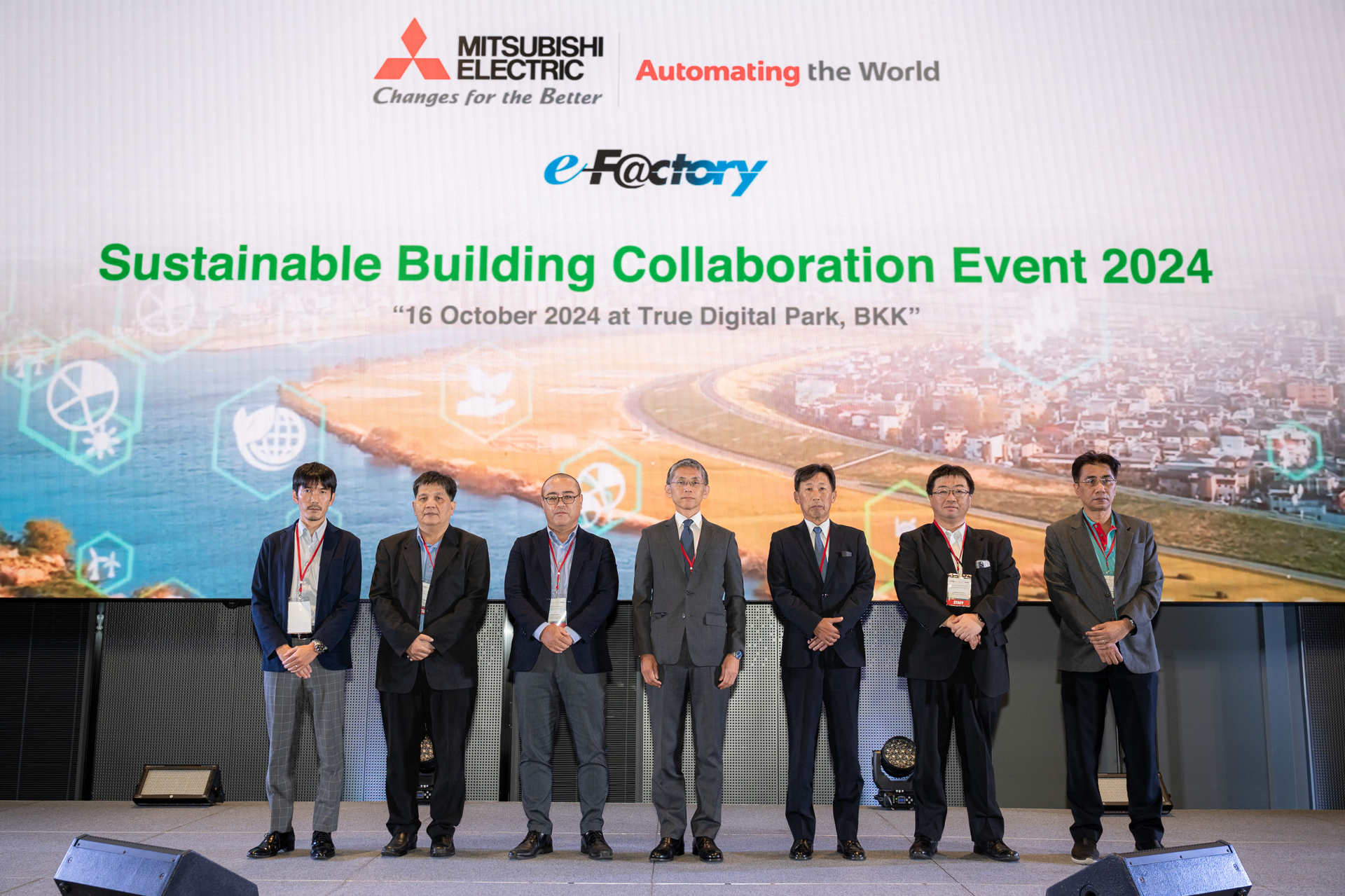
Mitsubishi Electric Thailand joins forces
and announces readiness to build the ECOSYSTEM for Sustainable Building Collaboration network
to move towards the Net Zero Emission goal.
Mitsubishi Electric Thailand organizes Sustainable Building Collaboration 2024 and announces collaboration with all sectors to move forward in creating an ecosystem that responds to the trend of "green buildings" with integrated smart solutions and products from Mitsubishi Electric and partners to drive Thailand to achieve the Net Zero Emission target sustainably.
Climate change has become a global issue that every country has to face, and Thailand certainly cannot escape this challenge. According to the latest data, Thailand is ranked 9th among countries that will be affected by global climate change.
For this reason, Thailand has set a long-term goal to seriously reduce greenhouse gas emissions, aiming to achieve carbon neutrality by 2050 and moving towards Net Zero Emission or net zero greenhouse gas emissions by 2065. However, achieving this long-term goal requires short-term actions first. Thailand has set a short-term goal of significantly reducing greenhouse gas emissions by 2030.
And most recently in 2024, Thailand has completed the greenhouse gas emission reduction action plan "Draft of Thailand Climate Change Act" or "Global Warming Act". This plan is currently under consideration by the National Economic and Social Development Council (NESDC). After approval from the NESDC, it will be presented to the Cabinet for final approval. Once the plan is approved, it can be implemented in all important sectors, including energy, transportation, industry, waste management, and agriculture.
Therefore, 2024 is the year of preparation for all sectors, especially the industrial sector, to adjust their business strategies to be in line with the approach to reducing greenhouse gas emissions and the provisions of the Thailand Climate Change Act. In addition to the manufacturing sector that needs to adjust, the importance of creating “green buildings” or modifying buildings to be in line with the Sustainable Building concept, which emphasizes energy saving, and the production of renewable energy for use in buildings is another mechanism that will help reduce greenhouse gas emissions effectively.
Mitsubishi Electric Thailand recently held the Sustainable Building Collaboration 2024 to support businesses in the manufacturing sector, especially the building construction industry, to achieve sustainability goals by focusing on enabling each business to make decisions based on accurate, appropriate and intelligent information to prepare for a sustainable future through strategies for resource and energy management for effective carbon reduction.
It includes demonstration information, knowledge of key principles in creating a Sustainability Building, and points out opportunities for networking among attendees. Today, all attendees will learn about sustainable building planning technologies and practices through demonstrations from companies in the Mitsubishi Electric Group in Thailand, as well as dealers and business partners who will bring highlights of each company's outstanding products and solutions to exhibit at various booths within the event.
Understand the initial concept Mitsubishi Electric Group's "Sustainability Management"
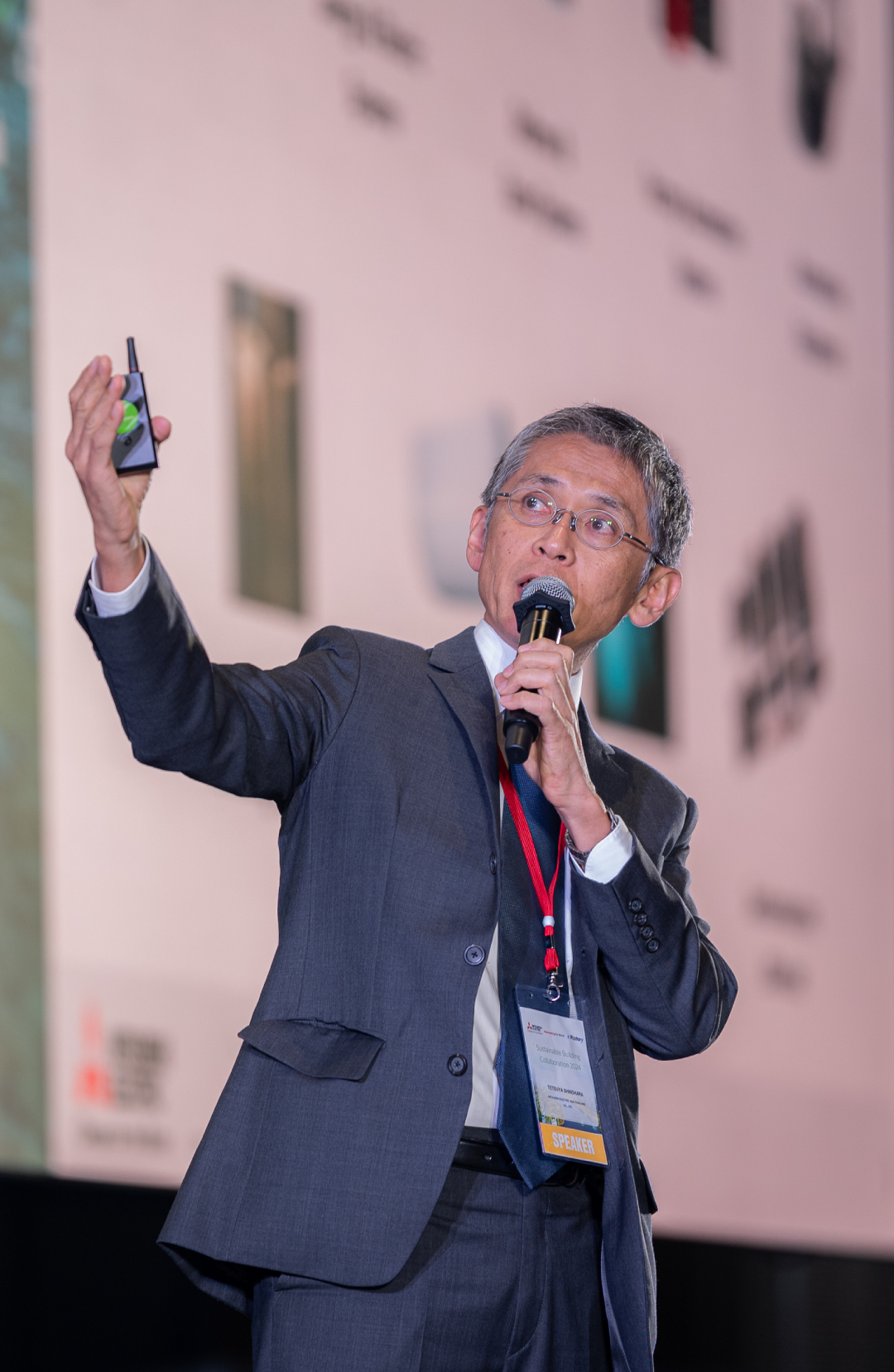
Mr. Tetsuya Shinohara
Managing Director
Mitsubishi Electric Asia (Thailand) Co., Ltd.
“In today's event, we intend to set the topic of the lecture to provide interesting knowledge of automation systems used in managing smart buildings to meet sustainability needs. We see an opportunity that all sectors can achieve success together under the sustainability goal of jointly reducing the amount of greenhouse gases released into the atmosphere and causing global warming through cooperation. The Mitsubishi Electric Group is ready to work together with both subsidiaries and partner companies of customers, both government and private sectors, to achieve this goal together.”
“In the past, it must be admitted that this has been a challenging mission for the Mitsubishi Electric Group and our partner companies who have jointly invented and designed solutions to address sustainability issues. And of course, we intend to continuously deliver this solution to our customers through investment in resources, creativity, and expertise to effectively reduce the amount of carbon and greenhouse gases for our customers.”
“Before we start today, let me give you a brief overview of the Mitsubishi Electric Group. We are a Japanese company that is one of the “Hundred-Year-Old Companies” because Mitsubishi Electric was founded in 1921 and has expanded its business to Thailand since 1964. Mitsubishi Electric Group in Thailand has 5 businesses: Building Systems, Air Conditioning and Home Appliances, Automation Systems for Industrial Plants, Equipment, Parts and Tools for the Automobile Manufacturing Industry, and Energy and Electrical Systems.”
“We have set our company strategy with the goal of creating a vibrant and sustainable society, focusing on the management of the sustainability of the community, using our basic principles to jointly solve social challenges by using all our resources, consisting of 5 aspects such as Carbon Neutral, Circular Economy, and Well-being. We have applied the concept of Circular Digital-Engineering to help create social and economic value. It is a system for linking important knowledge to data analysis systems and creating new value. It presents a collaborative approach to create a management system to achieve sustainability in all dimensions, answering social challenges in all aspects. In addition, we have designed a digital platform, "Serendie," to serve as a central system for data management and cooperation among the group and its partners to achieve the goals in line with the Circular Digital Engineering approach.”
Update the policies of the TGO to create awareness and move towards carbon neutrality.
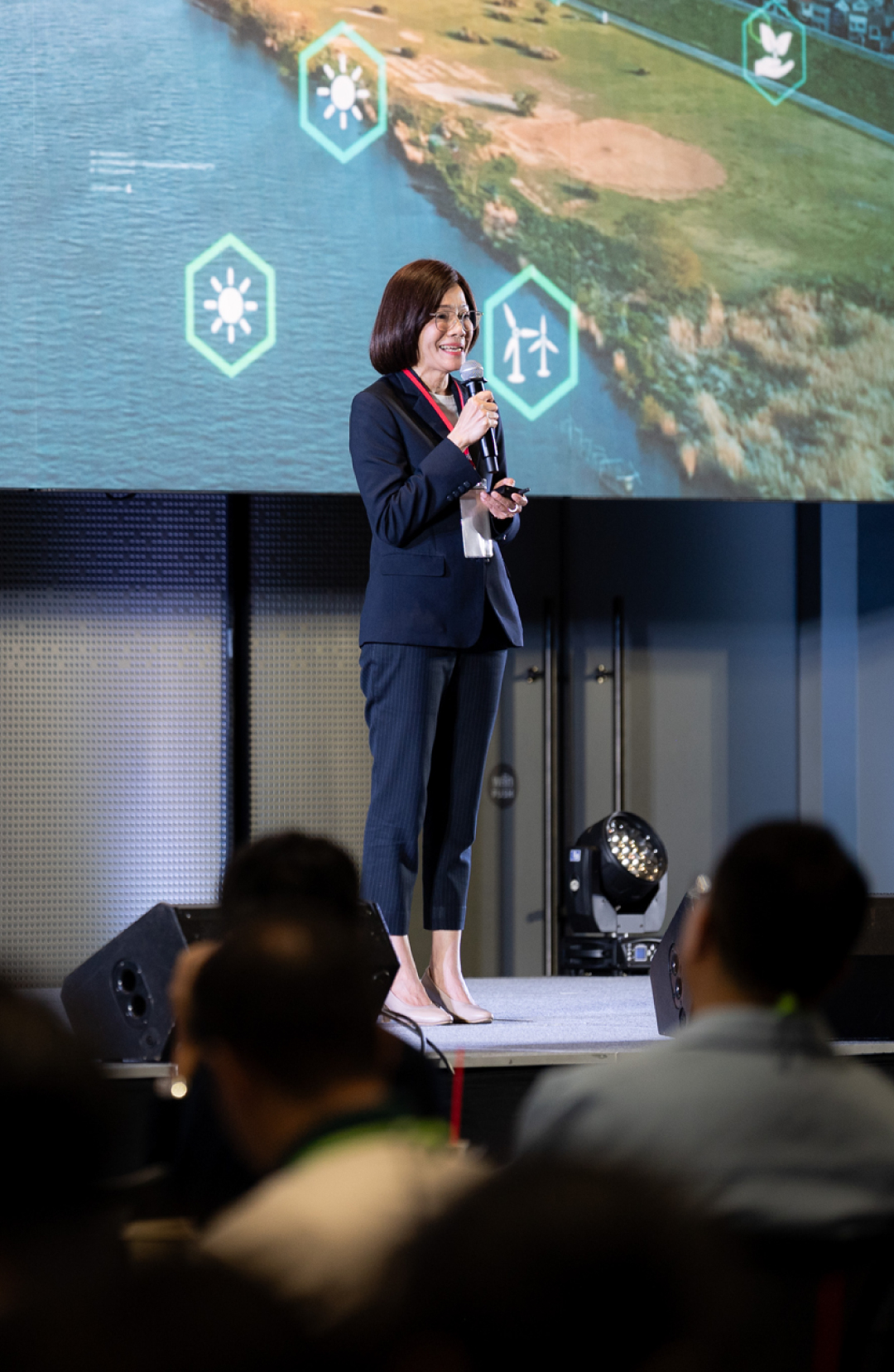
Ms. Phakamon Supappunt
Director of Low Carbon Business Certification Office
Thailand Greenhouse Gas Management Organization (TGO)
“Thailand is ranked 9th among countries that will be affected by global climate change and we are now committed to the Paris Agreement, which makes Thailand responsible for joining all countries around the world in controlling the global temperature rise to no more than 1.5 degrees Celsius. In addition, it is estimated that if we do not play a part in solving the problem of global warming, Thailand's GDP will decrease from 5 percent to 44 percent. Therefore, global warming not only causes many disasters, but also has a significant impact on the economies of all countries around the world.”
“At the global level, organizations still have a mission to drive their organizations towards Net Zero by 2050 at the latest, with the industrial sector being one of the sectors that releases a large amount of greenhouse gases into the atmosphere. From now on, the Thai industrial sector must report the organization's greenhouse gas emission rate every year, according to the provisions of the Global Warming Reduction Act. In addition, if any product has a high carbon footprint, additional taxes will be collected. This Act is expected to be announced no later than 2025.”
“To help Thai entrepreneurs, the TGO has currently developed various tools for organizations to apply to reduce carbon and aim for Net Zero, which will help Thai entrepreneurs reduce costs in terms of auditor fees for foreign certification organizations. The TGO is therefore accelerating the creation of a carbon footprint certification mechanism at both the organizational and product levels. In addition, there is a certification for carbon credits, which is in line with the global trend that places importance on carbon footprints. Therefore, the Thai manufacturing industry must adapt to this trend if it wants to export products to countries that place importance on this issue, especially countries in the EU.”
“Until in the past few years, there has been a trend of creating “green buildings”, which must be admitted that this trend has helped reduce the amount of greenhouse gas emissions from all activities related to construction to the use of the building. For example, during construction, there will be Embody Carbon, which will be calculated from every construction material used to assemble the building. As a result, in the past, many construction material manufacturers have continuously applied to register their carbon footprint for circular economy products.”
Lessons learned from Mitsubishi Electric Corporation's Net Zero Energy Building prototype, SUSTIE
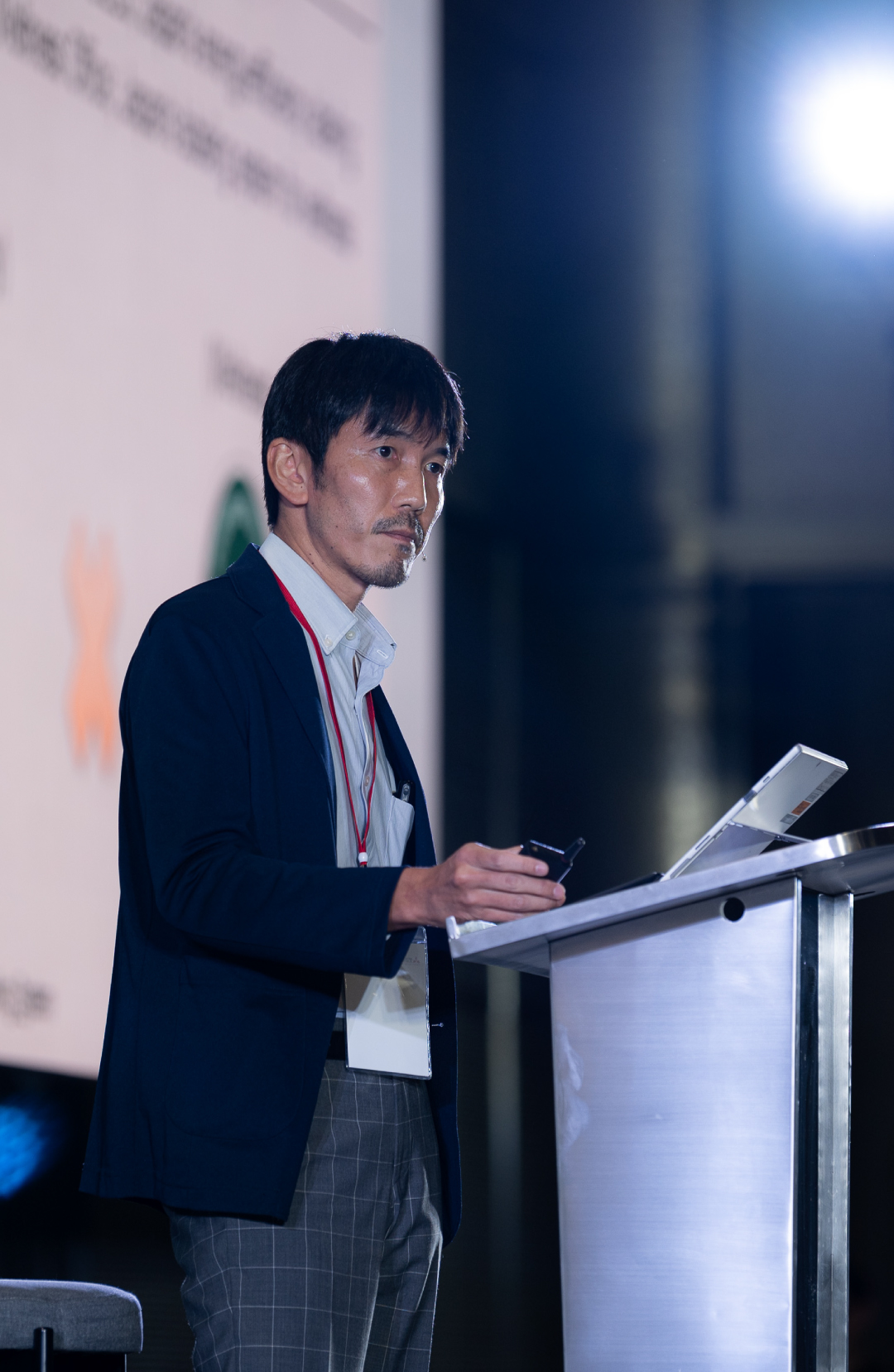
Mr. Hiroki Nishiyama
Global Manager of Data Center Marketing
Mitsubishi Electric Corporation
“SUSTIE or Net Zero Energy Building (ZEB) is a building designed by Mitsubishi Electric Corporation to meet the needs of both energy saving and well-being as well as comfort of its occupants by implementing a high level of energy saving system.”
“The word “SUSTIE” is a combination of Sustainability and Energy to convey the important concepts in the design of this building, which are “sustainability” and “energy saving”. The SUSTIE building has been certified for both energy saving and creating a good health and office environment for its occupants.”
“This building has a system to measure temperature, humidity, carbon dioxide levels, and also has an intelligent system that uses IoT technology to control the air conditioning system for maximum efficiency. There is also a screen that shows the amount of energy used in the building, the amount of renewable energy generated from the use of solar panels, and the amount of carbon dioxide produced in the building. If an abnormal amount of carbon dioxide is detected, which may be due to a large number of people in the room or area, the building manager will be informed immediately.”
“SUSTIE is a prototype of a mid-level office building with a construction area of approximately 1,950 square meters. The structure is a 4-story steel structure. In designing the SUSTIE building, we have been evaluated and given the highest design scores of 2 very important standards in Japan: BELS in the field of Energy-efficiency, which received a Ranking score of 5, and another standard is CASBEE, which is a standard for measuring organ and health, which received the highest score of S5 Stars.”
“The purpose of creating SUSTIE is to accelerate research and development of technology in various areas related to the ZEB (Net Zero Energy Building) system and to make SUSTIE a prototype for further development and use in other projects. The key feature of SUSTIE as a prototype of ZEB is that it must be a building that uses significantly less energy than a normal building and can produce its own energy using solar power. There must be a balance between the energy produced and the energy used, which must add and subtract to get a value of zero.”
“For the ZEB system certification in Japan, there are 4 levels, and SUSTIE is certified at the highest level, which can reduce energy consumption by 100 percent through energy saving and additional energy production with the building’s renewable energy system. The creation of SUSTIE has 4 main objectives: One, select a medium-sized building, which is generally the most common type of building. Two, plan to construct this building in an urban area with a small area, and increase the challenge of constructing this building in an area where it is quite difficult to construct Solar Panels, in order to demonstrate the potential of the technology used by Mitsubishi Electric Corporation. Three, set goals to achieve both energy saving and efficient space utilization to create a suitable and comfortable working environment. Four, demonstrate the full efficiency of the ZEB system.”
“In creating SUSTIE, we have leveraged Mitsubishi Electric's strengths by introducing the most efficient equipment and systems to achieve high energy saving targets. For example, the ventilation system will introduce the Lossnay brand to reduce the temperature difference measured between the indoor and outdoor temperatures of the building. The elevator system will use Mitsubishi Electric's own elevators, which can be seamlessly connected to all systems. In addition, we have high-quality hardware products to help all sectors effectively achieve their energy saving targets.”
“In energy conservation for buildings, the most important thing is to allow building managers to see the energy usage in the building in real time, or the ZEB Visualize Screen. For SUSTIE, we can see how much energy the building saves per second. In addition, we can see how many people are in the room in order to produce and distribute energy appropriately. This information will be stored and simulated as data that can be analyzed and improved in the SUSTIE building at all times. After actually using the building, we collected data and found that we could reduce energy usage by up to 115 percent.”
Mitsubishi Electric Kang Yong Wattana, another strength of Mitsubishi Electric, a leader in intelligent products and solutions that respond to Sustainability Building trends.
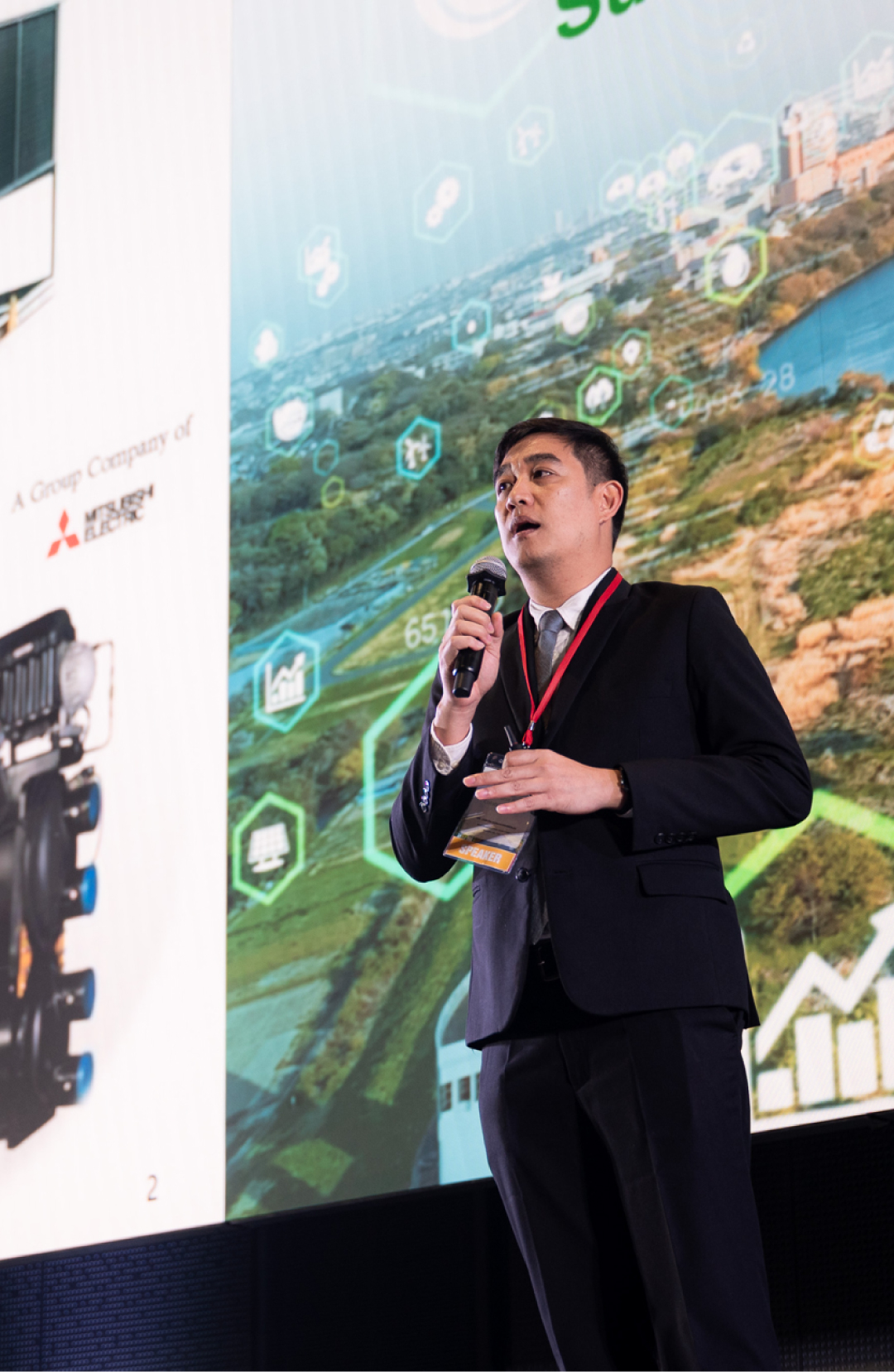
Mr. Jamorn Wongsuksamerjai
Assistant Department Manager
Mitsubishi Electric Kang Yong Wattana Co., Ltd.
“In every building, the air conditioning system is the part that uses the most energy in the building, especially the water chiller or Chiller. This type of product uses the most energy and today Mitsubishi Electric Kang Yong Wattana has developed a water chiller that can save more energy and is more environmentally friendly. This water chiller is a product under the brand CLIMAVENETA, which is a company of the Mitsubishi Electric group. The highlight is the Oil-free magnetic bearing centrifugal chiller system, a new technology that does not use lubricating oil in the Chiller. Therefore, it is more efficient than the original Chiller and can cool up to 2,000 tons with the components of using environmentally friendly refrigerants.”
“In addition, the latest technology allows the Chiller to select the working load according to the actual conditions. The system will know when to turn each Chiller on and off. Therefore, Mitsubishi Electric products can process the actual work and try to make the machine work in the most efficient mode. We also use more environmentally friendly refrigerants, cooling up to 300 tons, which is one of the products that SUSTIE building has used.”
“And another best-selling product is the VRF air conditioning system, which has been developed into the latest 2024 model that has been certified for efficiency by the Electricity Generating Authority of Thailand. It has received a No. 5 energy-saving label and can preserve the environment by reducing carbon dioxide emissions by up to 3,722 kilograms per year.”
Mitsubishi Electric Factory Automation (Thailand) Co., Ltd. joins hands with partners and shares perspectives on creating an ecosystem that meets the needs of Sustainability Building Collaboration in Thailand.
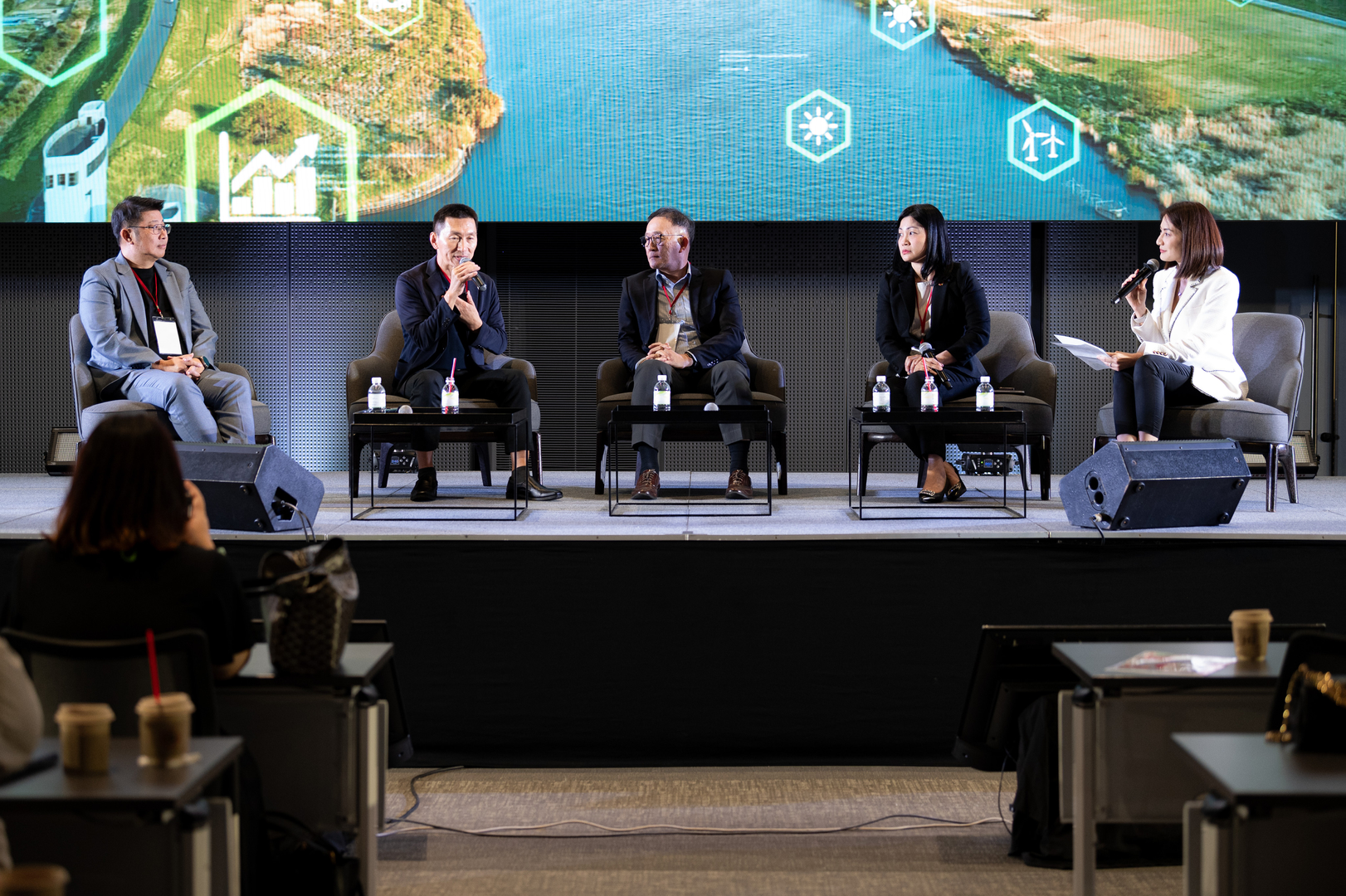
It's time for the panel discussion to share approaches to creating an ecosystem that meets the needs of Sustainability Building Collaboration in Thailand byMr. Parinwatt Parnsingh Industrial Marketing Management Division Manager from Mitsubishi Electric Factory Automation (Thailand) Co., Ltd. and partners including Mr. Kajonsak Suwattanakorn – Deputy Managing Director of Siam Compressor Industry Co., Ltd., Mr. Chaveng Sethaporn - Head of Commercial Credit Product Development and Ms. Jamjun Siriganjanavong Executive Vice President, Head of ESG Finance Department Bank of Ayudhya Public Company Limited
Mr. Parinwatt shared his perspective as a leader in providing smart solutions to the Thai industrial sector, covering solutions for management in Sustainability Building.
“As for MELFT, we take care of the automation systems used in the industrial sector. However, in presenting the best solutions to achieve the Net Zero target, there is no separation because moving towards this goal is important because the heart of the goal is to adapt various technologies to achieve this goal. Therefore, MELFT intends to do every mission, especially giving importance to R&D (Research and Development) to design and develop various solutions that will support every operation that occurs to achieve this Net Zero target together.”
“In the past, we have also focused on creating collaboration with all sectors to create solutions, create new added value to respond to various problems based on the expertise of each related sector. We have partners all over the world, from Alliance and technology inventor companies, who can manage various data to solve various problems in each matter. Therefore, we are confident that in terms of network or Collaboration, Mitsubishi Electric has focused on and has experience in presenting solutions to respond to SDG trends for quite a long time.”
“The ZEB Building solutions that we will present to customers are solutions that Mitsubishi Electric has already implemented in both Mitsubishi Electric factories and buildings. They were certain of their efficiency, which had been certified by a globally recognized certification body, before they were presented to customers. Furthermore, when Mitsubishi Electric succeeds in developing prototype buildings or systems, we also intend to open them up as a learning space for all sectors.”
“And in today's event, MELFT had the opportunity to emphasize its commitment to being a solution provider to address Decarbonization in the industrial sector, which Mr. Wichiene Ngamsukkarsemsri Managing Director of Mitsubishi Electric Factory Automation (Thailand) Co., Ltd. announced since 2022, and today we are ready to collaborate with all parties to effectively create an ecosystem in Sustainability Building Collaboration in Thailand.”
“The key to achieving Carbon Neutrality and reducing carbon emissions for every organization is that we must be able to effectively measure the amount of carbon in every process. Because if we can't measure it, it means we can't manage it, and it must be clearly visible for analysis and entry into the process of action to reduce carbon in each step.”
“In the past, MELFT has used SCADA GENESIS64™ to link all data of machines and various equipment to know how they work, what problems they have, and whether we will find weaknesses that need to be improved. And in today's event, the theme is Sustainability Building Collaboration, which combines the power of allies from every sector to drive the ecosystem and the appropriate use of various technologies. MELFT and Mitsubishi Electric Corporation are another sector that will present solutions ready to connect with every sector, following the guidelines that Mitsubishi Electric adheres to.”
“Making all technology seamless means seamless and connected, whether it is Mitsubishi Electric's own department or other departments, focusing on the Sustainability Building angle, Mitsubishi Electric already has products that meet almost every aspect of this trend. It can be said that Mitsubishi Electric is the real deal with expertise and readiness in the Building Management sector that intends to push for a true Sustainability Ecosystem.”
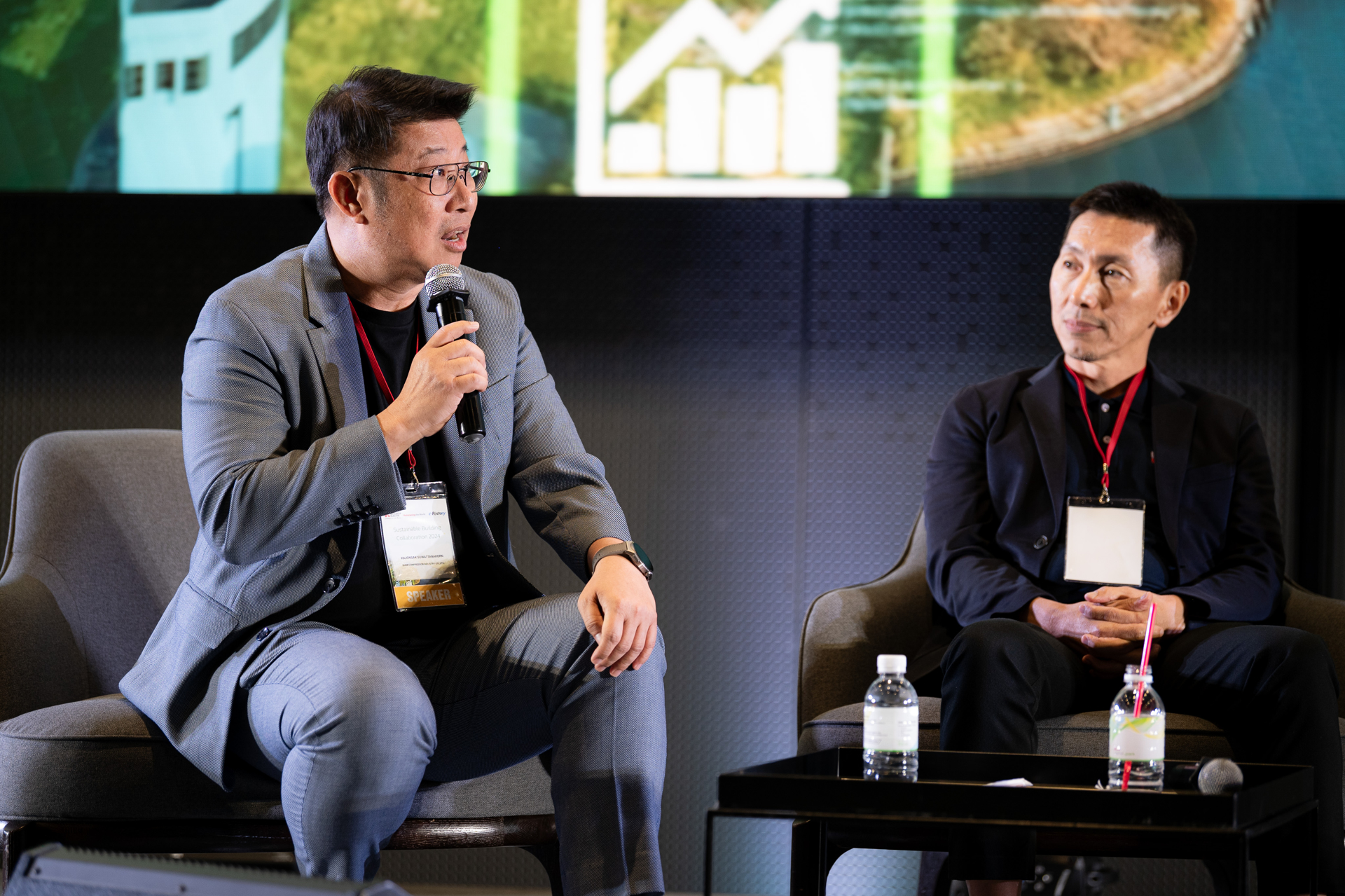
Mr. Kajonsak added that in terms of innovation for sustainability that SCI intends to create that
“The collaboration in driving the sustainability dimension in the industrial sector requires an analysis to “solve weaknesses, strengthen strengths”. SCI itself has emphasized the business operations based on the ESG approach, especially in the environment aspect. SCI is the leader in installing 4.5 megawatts of solar cells, reducing carbon emissions by 8 percent by using digital technology to design products that are environmentally friendly and energy-saving, and respond to the Circular Economy or circular economy and develop energy-saving products. Most recently, we are about to sign an MOU with the government sector to implement Clean Energy. We aim that by 2030, SCI will use 100 percent Clean Energy.”
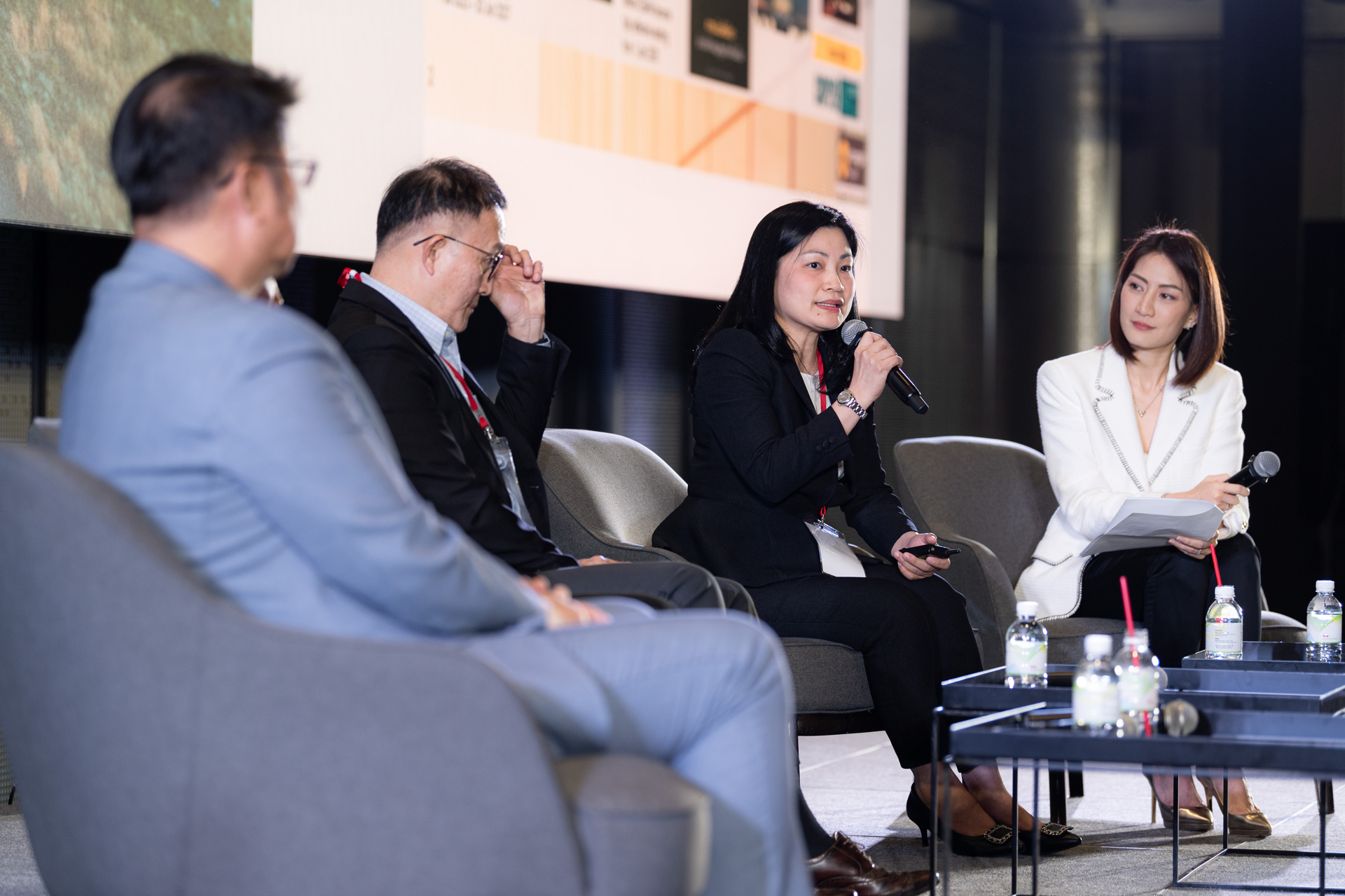
In the financial and banking sector Ms. Jamjun provided information on credit support and knowledge for Thai entrepreneurs in green business.
“In the financial sector, we are one of the sectors that drives and cooperates in supporting various projects based on the concept of sustainable finance, which we have been doing since 2018, such as organizing Krungsri Tech Day, which emphasizes driving green businesses with digital technology, or organizing a forum to present ways to support businesses in their transition to green businesses. All activities are organized to prepare the business sector for the enforcement of the Climate Change Act, which will officially collect taxes.”
“Meanwhile, with the trend of green building construction, the bank is also opening up opportunities for entrepreneurs to apply for Green Finance credit lines. In order for the bank to support businesses to adapt to “green businesses,” the bank must also have measurable and evaluative data. In this regard, solutions and technologies from other agencies that share the same vision in the ecosystem that we will create will be used to complement each other, leading to the achievement of the set Net Zero Emission target.”
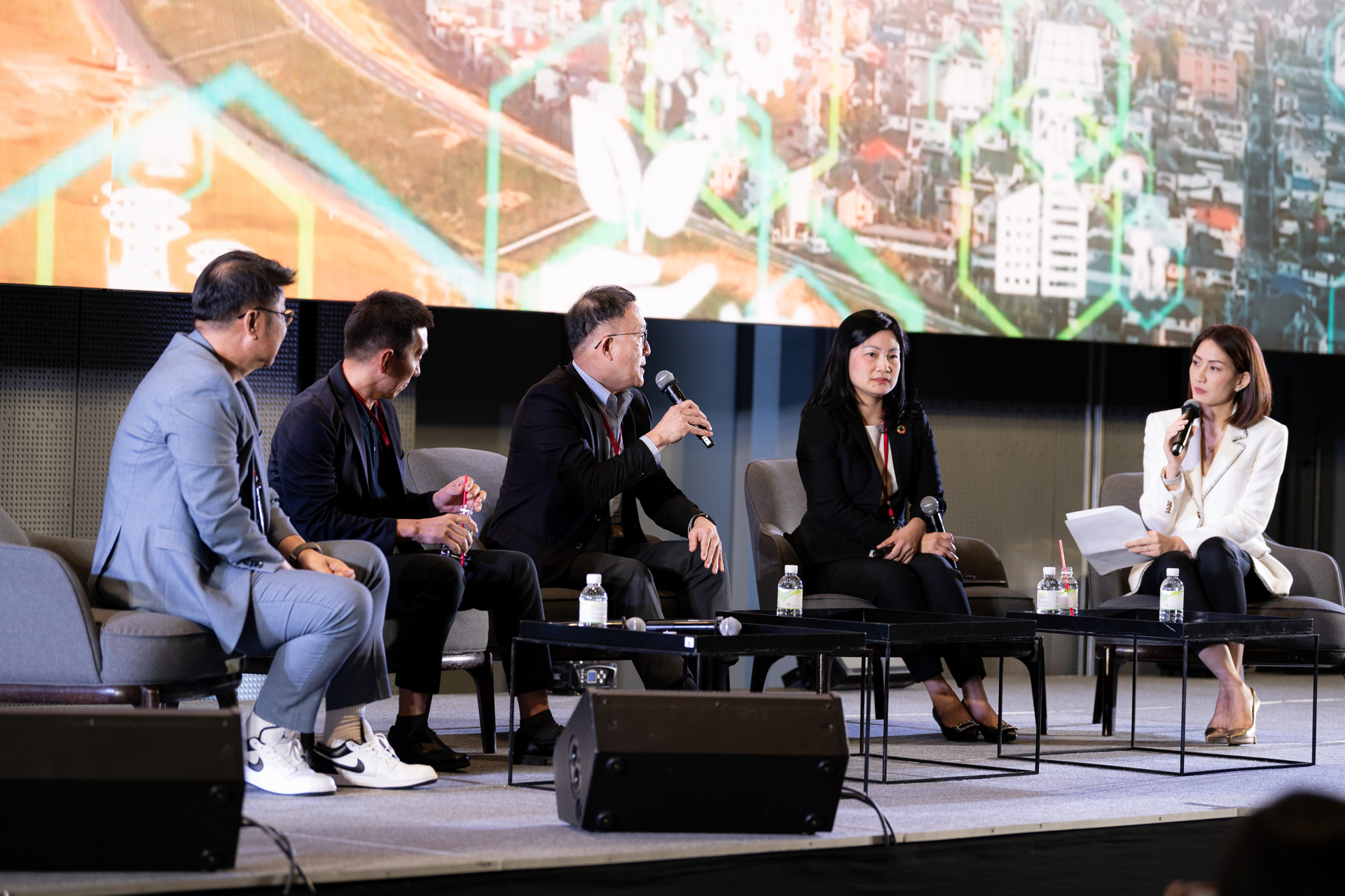
And Mr. Chaveng also added in terms of strengthening Thai SMEs to adapt to “green businesses” that
“In terms of SMEs, when it comes to sustainability issues, it is different from the large business sector. It must be admitted that in the past, awareness of changing businesses to be environmentally friendly was still low, from the point of view of applying ESG trends to business operations to knowing what changes SME businesses will face in the near future when laws such as the Climate Change Act are enforced. Therefore, Krungsri, as a bank, has a duty to create awareness for Thai SMEs in all dimensions.”
“Therefore, the challenge for the financial and banking sectors is to drive Thai SMEs to be aware of green business by enhancing their knowledge and creating understanding in all dimensions related to doing business that cares for the environment and reduces carbon emissions to zero. Meanwhile, Krungsri will continue to support “sustainable finance”, whether it be through a loan support mechanism or organizing various projects that will support Thai SMEs to have knowledge and readiness, such as opening up SMEs to learn about sustainability through Krungsri’s ESG Academy.


